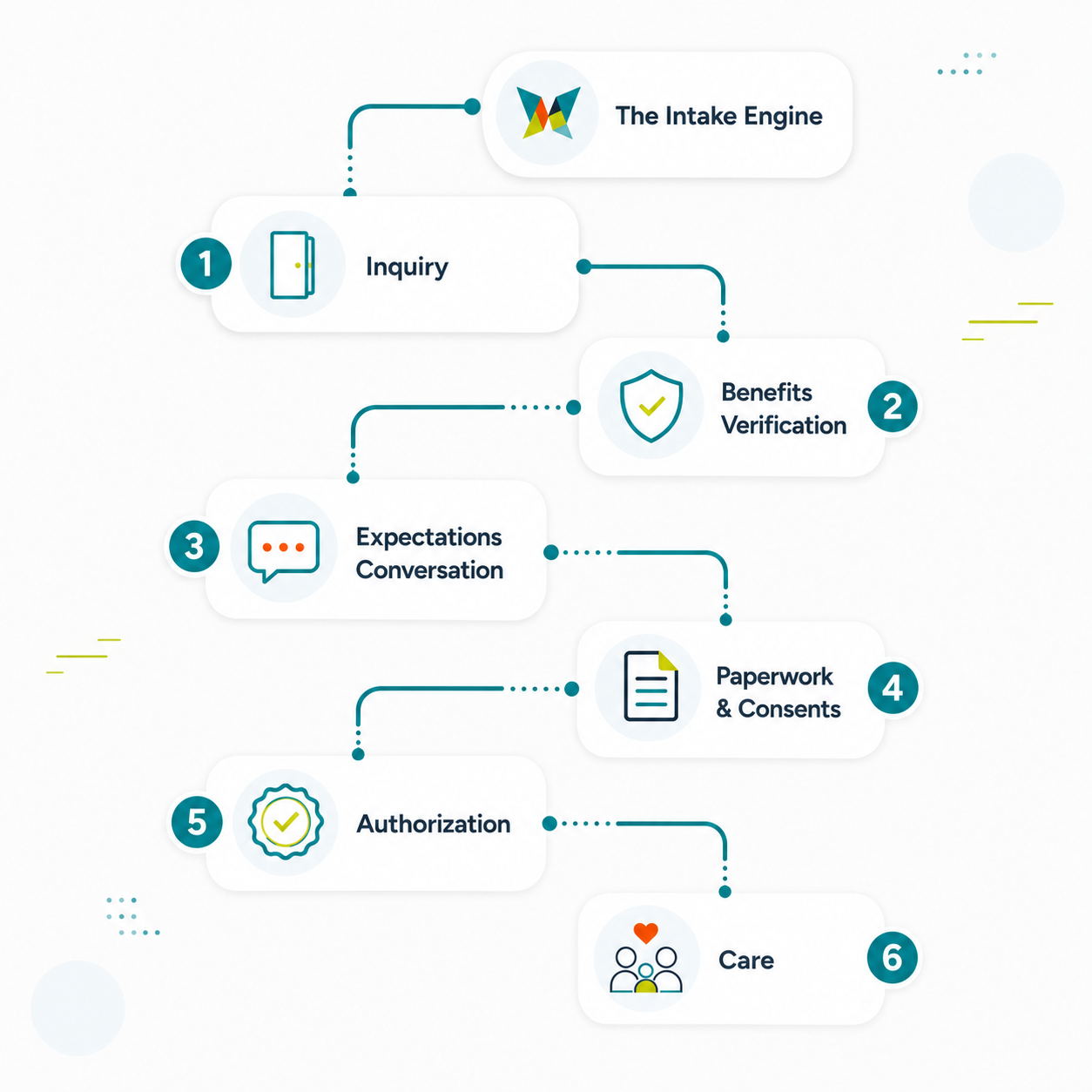
For many ABA clinics, intake starts with good intentions but quickly turns into a scattered mix of emails, forms, follow-ups, payer calls, and manual handoffs. We created this resource for ABA clinic owners, operators, and directors who want a better way to manage one of the most common bottlenecks in clinic growth: Intake.
In this short video series, Erica Kinnebrew, clinician and founder of ABA Engine, breaks down the six-step Intake Engine she has implemented successfully across many ABA clinics to help teams move families from “I’m interested” to their first authorized session with less chaos, fewer delays, and more accountability.
Watch the series below to get practical intake best practices you can apply right away to reduce dropped follow-ups, protect authorized hours, support your team, and create a smoother path for families waiting for care.
The final step can protect revenue, hours, and care access. Erica explains how to move from assessment to services without stalling.
Intake should move families forward, not disappear into chaos. Here we introduce the six-step system from inquiry to first authorized session.
The first inquiry is where many clinics lose families. Learn how to make requests visible, simple, and easy to move forward.
“ABA is covered” is not enough. Learn the benefit questions that help prevent payer surprises, delays, and costly rework.
Families need clarity before more work begins. This step aligns costs, policies, services, and schedules before issues surface later.
Large intake packets slow families down. Erica explains how smaller paperwork steps can improve completion and keep intake moving.
Authorization delays often start with missing payer details. Learn how to collect the right information upfront and avoid rework.
The final step can protect revenue, hours, and care access. Erica explains how to move from assessment to services without stalling.
The Intake Engine is not just a better checklist for better intake. It is a connected way to manage the full path from first inquiry to authorized care, so families do not fall through the cracks and your team does not have to rely on inboxes, spreadsheets, and memory to keep the process moving. Good processes lead to better experiences for families, which lead to more referrals back at the top of the process.
ABA Engine helps clinics bring that workflow into one platform, with the visibility, structure, and accountability needed to streamline intake and support the operations behind care delivery. If you’re interested in learning more, don’t hesitate to reach out to our team for more guidance.