
The ABA session note audit is a powerful part of accomplishing the goals of ABA clinics. Think about it: the goal for virtually every ABA clinic is to provide superior service to your clients, of course. Plus, with payers scrutinizing notes more closely and documentation requirements often tricky, clinics need a standardized workflow.
We’ll show you how to run an audit, what to check, and how to cut down on rework.
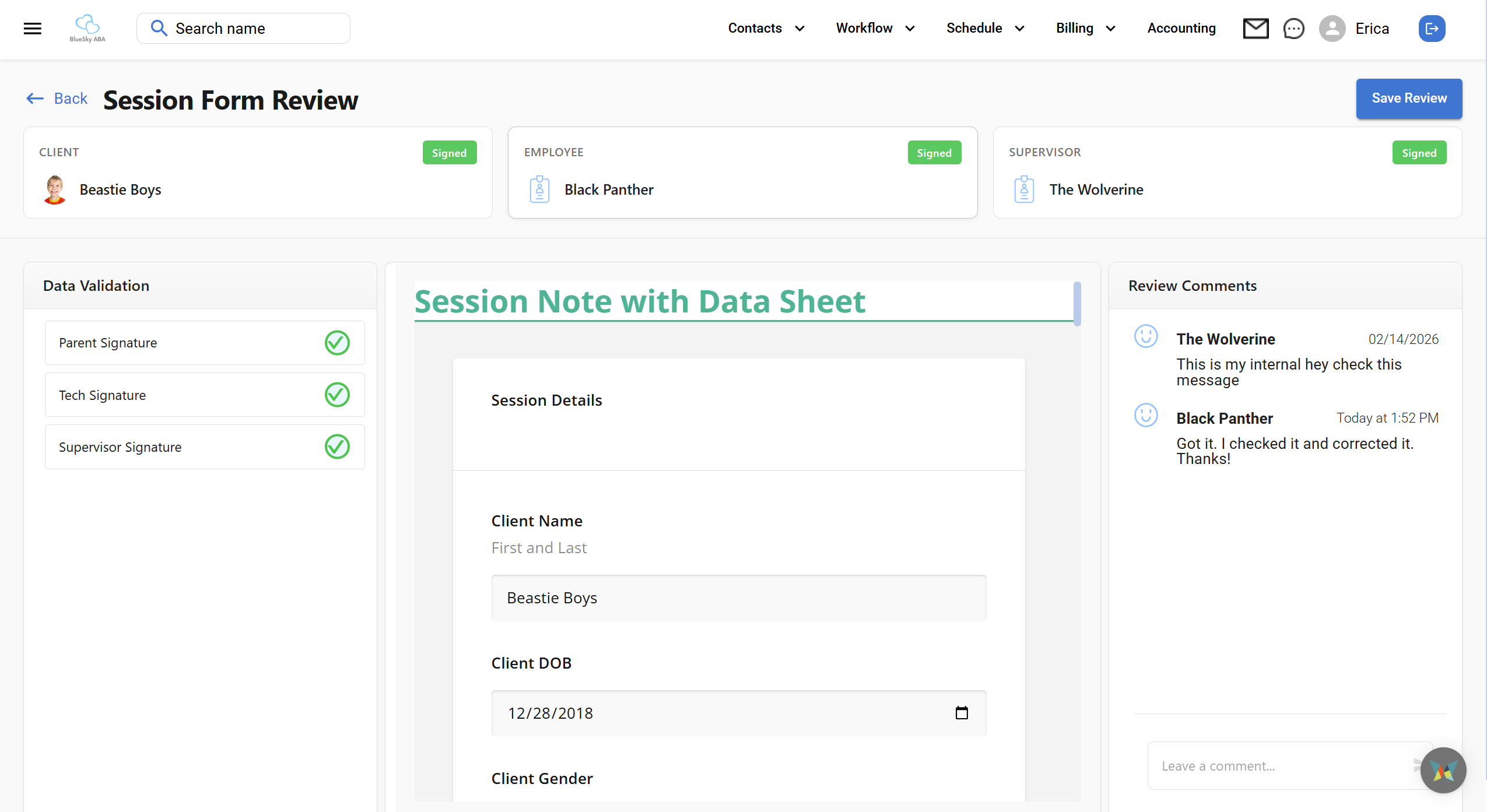
To begin, it’s important to understand what an ABA session note audit is. Because the purpose of ABA clinics is to provide high-quality service to clients, the audit supports consistent, audit-ready documentation in real clinic workflows.
You want your clinicians to take excellent notes that address all aspects of a session with the client. Notes should include information like the exact times of the session, whether goals were met, what kind of intervention was used, and more.
To be sure your clinicians are taking thorough notes, you’ll run an ABA session note audit on each session at regular intervals. This helps you catch documentation gaps early, reduce billing rework, and stay audit-ready.
And it keeps you on top of everything from scheduling to interventions.
It also helps keep your clinic running smoothly, with staff staying on task and clients getting their needs met.
The bottom line is this:
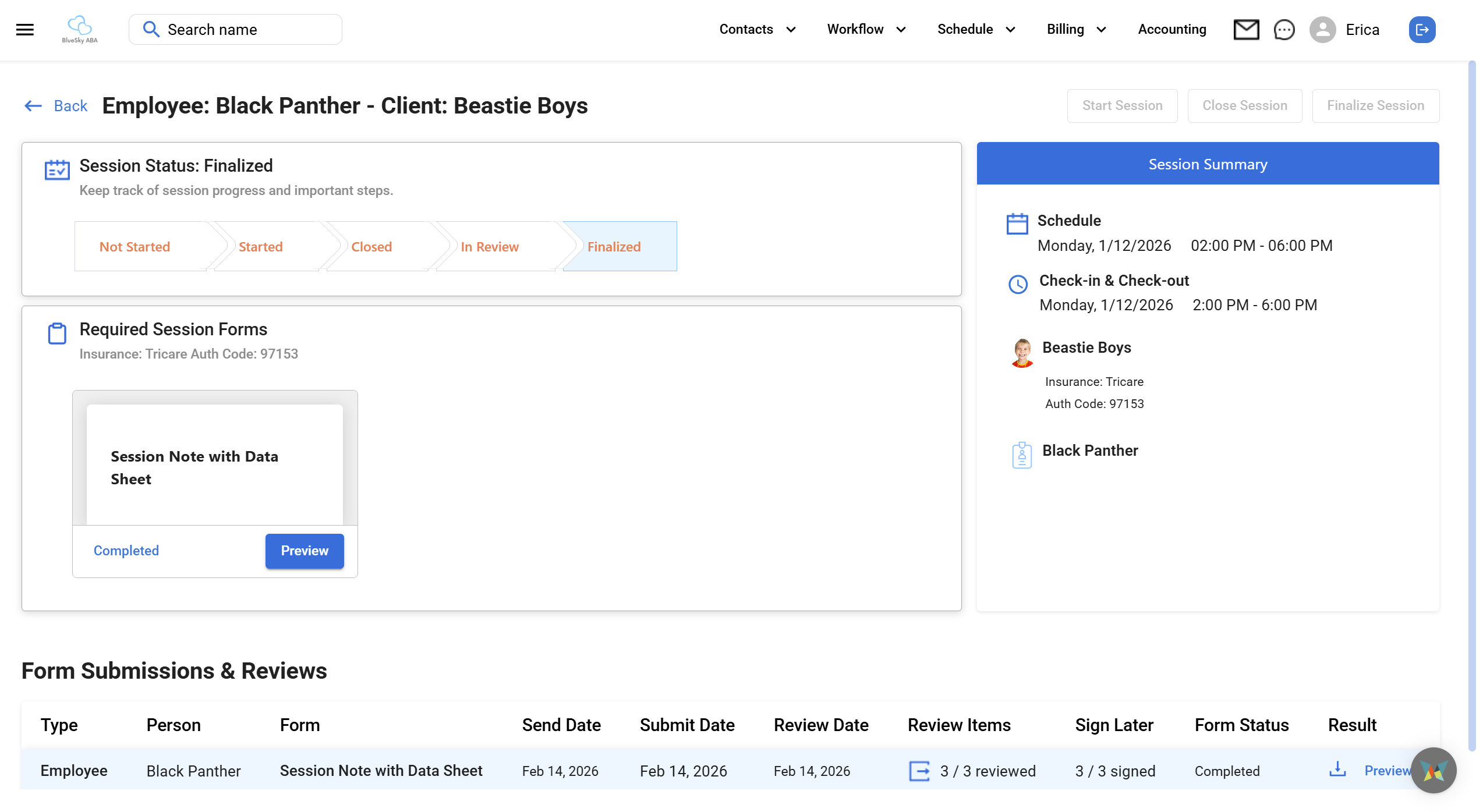
Audit readiness comes from how your session note workflow is built. If required fields, signatures, and review steps happen inside the workflow, audits become simple and predictable.
In contrast, if you’re trying to run things from multiple platforms or still using pen and paper, audits and sessions in general can be chaotic.
This chaos is precisely why many ABA clinics struggle. The transition from paper and pencil to digital note-taking and client management isn’t easy. Many clinics may still be doing things the traditional way just because it’s what they’re comfortable with.
But they struggle to stay on top of the flow of information. And as the need for ABA appointments rises, staying on top of things will only grow more complex.
One staff member may not be able to read the handwriting of another. Payer-specific requirements likely vary from insurance to insurance. One set of notes might be missing signatures. Then, of course, there’s the range of standards across supervisors.
All of these issues can lead to failed audits and a breakdown of the flow of information.
To move into the digital age, it helps to run an ABA session note audit. This preliminary audit will allow you to take the measure of where your clinic is as of this moment. Then, you can decide whether to move into a system that keeps sessions and the notes that come with them smoothly.
From that point going forward, you should run monthly note audits. You can go deeper into documentation and billing-readiness checks on a quarterly and annual basis.
Here’s how to run an ABA session note audit in 5 steps:
Before you can do anything else, you’ll want to determine the parameters of your audit. That way, your audit will stay focused, and you’ll know what actions are necessary for follow-up.
Decide on:
Next, you’ll want to pull the notes you’re auditing from your documentation system.
You might be reviewing signed vs. unsigned documents, billed vs. unbilled sessions, notes that are pending supervisor review, or notes already flagged for review. You may even be pulling sessions with behavior incidents.
Filtering in this way will allow you to prioritize the notes that are higher-risk.
Now that you know what notes you’re pulling and what your parameters are, take a sample, usually about 10% of the notes of each clinician. Review those notes against your standardized checklist (which you created in step 1).
This process will help you create consistency and fairness, and it will keep your audit manageable.
In your review, you’re looking for an overall quality control that includes flags like:
As you make your way through your ABA session note audit, categorize the errors you find so you can track patterns later. These can include anything from documentation completeness errors to billing risks or formatting issues.
Once you’ve identified the existing issues in your session notes, send notes back to the clinicians, so they’re in the loop. The next step in the workflow is for your clinicians to make corrections.
Example: A note is missing the RBT signature, so billing holds the claim until it’s signed and re-reviewed.
To keep things moving apace, you can:
Keeping this process structured will prevent any small issues from turning into huge billing or audit risks.
Of course, the real value of running these audits lies in identifying patterns and improving your clinic’s processes.
You can analyze your findings to determine what the most common error types are. You’ll also be able to figure out which staff members or teams need extra training and support. This can then lead you to improve your training strategies from the moment of onboarding.
Here’s a sample of the kind of template you can have your clinicians work from. Using this, you should be able to prevent those small issues before they become problems.
For every session, clinicians should be able to check off each box from these audit-ready ABA session notes, showing they took thorough notes on:
When your clinicians use this template, your ABA session note audit should move quickly and efficiently.
This checklist is particularly helpful because, as we’ve seen from past ABA session note audits, many clinicians make the same mistakes in their note-taking.
Here are the most common audit failures:
Perhaps one of the most important parts of the ABA session note audit is to loop in the supervisors. When you have a workflow that includes both the clinician and their supervisor, you’re more likely to move through a comment-and-correction process.
With each audit, the quality of your notes will improve, and you can help stop the same issues from coming up over and over again.
As just one example, a clinician takes notes, the supervisor reviews the note, and then the supervisor can leave notes for the clinician. “Replace your wording, ‘felt,’ with an observable description.”
In the right ABA billing software system, the clinician can see the supervisor’s notes, make the correction, and remember to include observable descriptions in the future.

It is just this kind of system, a purpose-built workflow, that ABA Engine offers to ABA clinics. As you move your clinic from traditional paper-and-pencil notetaking, you want a digital platform that facilitates this shift.
Any note-taking platform should include:
Because being ready for an audit comes from clean workflow design, not end-of-month scrambling.
See how ABA Engine helps clinics run faster, with repeatable audits and built-in workflows.
Book your demo focused on audit-ready documentation.
See how ABA Engine helps clinics run faster, with repeatable audits and built-in workflows.
An ABA session note audit is a structured review of the notes ABA clinic staff take before, during, and after client sessions. The purpose of the audit is to ensure the notes are complete, accurate, and aligned with documentation standards and payer expectations. The audit includes a review for clarity and accuracy.
Payers will typically be looking for documentation that supports that the services the clinic provides are in line with the way the clinic bills for those services. They’re likely also checking to be sure those services are medically necessary.
An ABA session note audit typically includes session date, time, and duration, as well as how the clinician addresses the stated goals and any objective data collected. You’ll likely also look for notes on any interventions used, client responses, and any behavior or safety events. Finally, review any caregiver participation and signatures required.
It’s a common approach to review a sampling of clinicians’ notes on a monthly basis to catch any issues early and support additional training or coaching.
A signature audit trail is a record of who took notes, who signed them, who reviewed them, and what corrections or changes were made and by whom.
The most efficient way to reduce session note errors is to use standardized templates. This way, your clinicians must complete required fields before moving on, and supervisors must sign off before notes are complete.
The most helpful software features for ABA documentation audits include customizable notes templates tied to service types, payer-specific form requirements, automated validation for required fields, digital signatures with audit trails, supervisor review workflows, and dashboards that flag missing or incomplete notes.